YMH is a key public health concern with long-term societal implications. A growing number of studies are leveraging advances in AI/ML to improve the prevention, diagnosis, and treatment of mental health disorders in the general population. Similarly, research on YMH has started to follow this trend, emphasizing the need for targeted interventions. Therefore, increasing research efforts focused on this population and implementing key findings is essential. The present scoping review provides an overview of current methodologies applied to YMH with emphasis on emerging trends in multimodal approaches, given the heterogeneity of data sources involved (e.g., physiological signals, clinical records, social media, and self-reports), and online learning techniques, due to the continuous and dynamic nature of these data streams. Together, these dimensions define a promising yet under-explored intersection with considerable potential for advancing the diagnosis, monitoring, and treatment of YMH problems.
Despite this promise, the number of studies directly addressing YMH with AI remains limited. This observation should be interpreted within the broader context of the field, where research on AI in mental health more generally has expanded substantially over the past decade, encompassing hundreds of studies across detection, diagnosis, and intervention. Yet, the specific subset focusing on youth populations and particularly those employing multimodal methods or online learning remains relatively small. This gap underscores that youth-focused applications of AI represent not only an emerging but also a largely underdeveloped research niche within the larger landscape of AI and mental health, highlighting a critical opportunity for future investigation.
Overview of key topics
A total of 19 studies directly addressing YMH problems were identified, with the majority published between 2022 and 2024. The highest number appeared in 2024, particularly in the “YMH + AI” and “YMH + AI + Online Learning” categories (Fig. 2 and Table 1). Although publication counts across the four topics—”YMH + AI + Online Learning”, “YMH + AI + Multimodal”, “YMH + AI” and “MH + AI”—were comparable, a temporal trend indicates increasing incorporation of online learning methods in YMH research. In contrast, despite the increasing use of multimodal data in broader AI applications, no clear preference for unimodal or multimodal was observed in the reviewed YMH studies (Fig. 3 and Table 1).
Multimodal online learning
Although limited in number, a few studies have examined the use of online learning combined with multimodal AI in YMH problems. Andreas et al. applied an online transfer learning approach using CNN to classify stress based on the WESAD dataset, which includes physiological signals such as ECG and EDA50,51. Two years later, they introduced an updated version of their model, evaluated on both the SWELL-KW multimodal dataset that includes physiological data from office workers performing document editing tasks under varying levels of stress52 and WESAD. The updated model demonstrated improved robustness and performance53. These studies highlight the need to distinguish between homogeneous domains—where source and target data share similar feature spaces—and heterogeneous domains, which involve differences in modality, task, or distribution54. In heterogeneous settings, effective online transfer learning requires identifying and aligning common and domain-specific attributes53. Furthermore, both studies address concept drift in online learning, referring to temporal changes in the joint data distribution that can negatively affect model performance over time55,56.
Luo et al. proposed a branched deep learning model based on hierarchical multitask learning for concurrent stress classification and dynamic clustering57. The model was evaluated using the Dartmouth StudentLife dataset—comprising smartphone and wearable sensor data, along with psychological surveys from 83 students over two academic terms58—and WESAD. Two architectures were tested: CALM-Net (using LSTM) and CATran-Net (using Transformers). Both incorporated what the authors describe as an online learning setting to enable continuous model updates. However, while the method demonstrates model adaptation through incremental learning and subject-specific parameterization, it does not explicitly address other key aspects typically associated with online learning, such as continuous updates from a real-time data stream or concept drift detection. In addition, a branched extension to dynamic clustering was introduced, assigning new users to groups with similar stress patterns. This aims to address the cold start problem defined as the challenge of making predictions for unseen users with limited data59. Branched CALM-Net achieved F1-scores of 0.883 ± 0.023 (first week) and 0.912 ± 0.013 (up to second week) in StudentLife, and 0.960 ± 0.061 using 60% of WESAD. These results showed comparable performance to models trained on the full StudentLife dataset60,61.
Unimodal online Learning
Sah et al. proposed one of the earliest approaches resembling online learning in unimodal YMH by leveraging user-specific EDA signals from the WESAD dataset to develop personalized stress detection models62. Their framework first trains a general CNN model and subsequently adapts it to individual users through incremental learning with user-specific data. Although the authors describe this process as online learning, the approach focuses on model personalization rather than continuous updates from a real-time data stream.
Moontaha et al. applied online learning to EEG-based emotion recognition by incrementally updating models during real-time EEG signal acquisition63. These models were initially trained offline using the AMIGOS dataset64 and an additional author’s dataset. The results indicate that online learning enhances classification performance compared to models trained exclusively offline, achieving F1-score improvements of 23.9% for arousal and 25.8% for valence over previous ref. 63.
Together, the reviewed multimodal and unimodal studies applying online learning in YMH report improved performance compared to static (offline) models, particularly in emotion classification tasks. For example, Moontaha et al. reported improvements of up to 23.9% and 25.8% in arousal and valence detection using real-time EEG signals63. These results highlight the effectiveness of online learning for real-time adaptation in multimodal and unimodal settings. However, it should be noted that not all studies implement true streaming online learning; several rely on incremental learning or data evaluated offline rather than continuous real-time model updates. Notably, all identified applications focused exclusively on classification tasks; no regression-based study incorporated online learning (Table 1).
YMH problems
The detection of stress, emotions, and depression were the most explored areas. All studies that addressed multiple problems included stress, possibly due to its strong association with other mental health indicators (Fig. 4 and Table2)65,66. Additionally, all studies that incorporated online learning, as well as those categorized under the “MH + AI” topic, focused on stress and/or emotion detection. A similar trend was observed in studies employing purely multimodal approaches, with the exception of ref. 67, which focused on depression detection using audio and text data. The unimodal approaches applied to YMH were the most diverse, covering depression, cognitive performance, stress, emotions, and cyberbullying62,63,68,69,70,71,72,73,74,75,76,77,78,79, as detailed in Table 2.
Figure 4 further illustrates how current research is concentrated on symptom-level or at-risk states, with stress, emotions, and cognitive performance representing the majority of targets, while only a smaller number of studies address depression, which is more closely aligned with a recognized clinical condition.
This imbalance suggests that AI applications in YMH problems are predominantly oriented toward the detection of early symptoms rather than the diagnosis or intervention for well-defined clinical disorders.
Data typesPhysiological signals, videos, and images
Half of the analyzed articles utilized physiological signals, with cardiac signals being the most frequently used51,53,73,80,81,82, followed by electrodermal activity51,53,62,82, brain signals63,72,77, voice57,67,81, and eye-tracking71. Additionally, videos and images were employed for facial expression recognition83 and the analysis of handwritten text produced by students84.
Text, sensor-based data, and questionnaires
Text data appeared in multiple formats, including questionnaires, social media posts, surveys, and interview transcripts67,69,70,74,75,76,78,79,84,85. Approximately one-fourth of the studies incorporated sensor-based data, capturing parameters such as GPS location, temperature, heart rate (via infrared sensors), sleep patterns, and smartphone usage51,53,57,62,73,81 as detailed in Fig. 5 and Table 2.
3D skeletal joints
Notably, one study proposed an innovative approach using 3D skeletal joint data, captured through Kinect cameras (Microsoft Corp., Redmond, WA, USA), to analyze participants’ gait for depression detection68.
AI models
Most studies employed ML models, primarily in unimodal applications without online learning. The most commonly used models included SVM, RF, DT, and GB-based models63,68,71,72,73,74,75,76,77,79,80,81,85. In contrast, seven studies implemented deep learning (DL) models, most of which incorporated online learning. In these cases, CNNs and LSTMs were the most frequently used51,53,57,62,69,78,83. Additionally, two studies combined both ML and DL approaches70,82 (Fig. 6 and Table 2). Finally, the model categorized as “Other” in Fig. 6 corresponds to the study by Roy et al. who proposed a lexical analysis-based model for sentiment detection using student handwriting images and social media text84.
Validation and evaluation practices
Across the reviewed studies, most rely on offline validation strategies, primarily cross-validation67,71,75,80,81 or leave-one-out (LOO) validation68,72,82, performed on previously collected datasets. While these approaches are useful for estimating model performance, they do not necessarily reflect real-world deployment conditions, where data arrive sequentially and distributions may change over time. Only a limited number of works explicitly simulate online scenarios through progressive or streaming validation schemes51,53,57,62, and even fewer evaluate their models in real-world environments63,73. This gap between offline evaluation and real-world deployment makes it difficult to assess the practical robustness and longitudinal stability of the proposed methods.
Similarly, external validation across independent datasets remains uncommon. Although a few studies evaluate models on more than one dataset51,53,57,63,67,73, the majority of the reviewed works rely on a single dataset68,69,70,71,74,76,77,78,79,80,81,82,83,84,85. This increases the risk of overfitting to dataset-specific characteristics such as sensor configuration, experimental protocol, or population demographics. Additionally, participant samples are often small and demographically homogeneous, with many datasets composed mainly of college, university, or graduate students within relatively narrow age ranges. Such population bias restricts the applicability of the reported results to broader or more diverse youth populations.
Ethical and practical challenges
The deployment of AI systems in YMH contexts also raises important practical and ethical challenges. Unlike static models, adaptive systems continuously update their parameters based on incoming data, which introduces additional concerns regarding data governance, transparency, and system oversight86. In youth populations, data governance is particularly sensitive because longitudinal behavioral and physiological data are often collected from minors87,88. This requires robust consent and assent procedures, clear policies for data retention and secondary use, and mechanisms allowing participants or guardians to withdraw data from ongoing model updates.
Trustworthy is another critical issue. Because adaptive models evolve over time, the reasoning behind predictions may change as the model learns from new data. This dynamic behavior can make it difficult for clinicians to understand model outputs or maintain trust in the system89. Providing interpretable explanations, clear documentation, and regular auditing of model behavior is therefore essential.
Future studies and trends
Although the reviewed literature demonstrates promising progress in applying AI to YMH problems, several gaps remain open for future research. First, most existing studies target symptom-level or at-risk state indicators, while fewer address well-defined clinical conditions. Future work should broaden the typology of mental health problems considered, integrating under-explored conditions, thereby enabling more comprehensive clinical applications.
Second, methodological diversity remains limited. A substantial proportion of studies rely on unimodal data, whereas multimodal approaches could improve robustness and generalizability. The scarcity of demographic details also highlights the need for larger and more inclusive datasets that reflect age, gender, and cultural differences within youth populations.
Third, longitudinal and intervention-focused studies are largely absent. Current evidence is dominated by detection tasks, but advancing toward diagnosis, prognosis, and intervention design will require datasets and models capable of capturing changes over time. This progression is critical if AI is to support not only early identification but also the personalization of interventions for young people. Therefore, future research should prioritize systematic cross-dataset validation as well as longitudinal and real-world evaluations to better assess the generalizability and translational potential of machine learning models.
Finally, the rapid evolution of large language models (LLMs) and generative AI tools, such as ChatGPT, opens a novel research direction. These technologies could enable scalable, conversational support systems, assist clinicians in triage, or provide adaptive learning resources tailored to youth needs. However, rigorous evaluation of their ethical, clinical, and developmental implications will be essential to ensure safe and equitable implementation.
Limitations of the scoping review
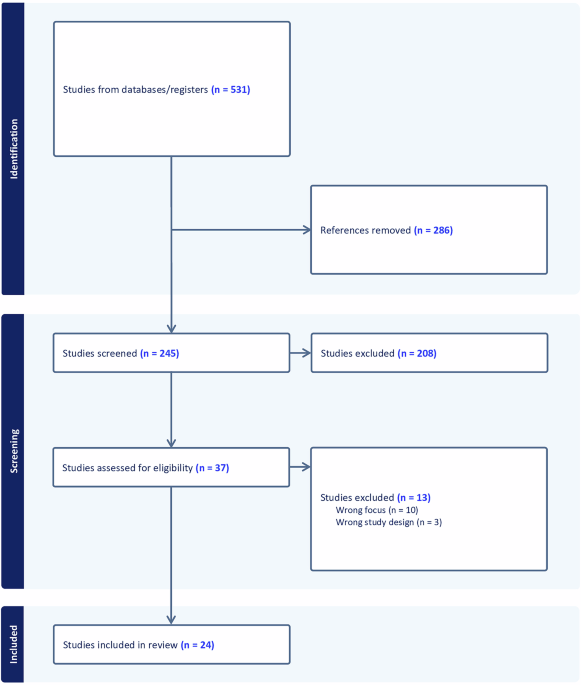
The studies included in this scoping review were carefully selected following a rigorous screening and review process and adhering to PRISMA guidelines. However, some relevant papers on YMH may have been excluded if they were not indexed in the selected databases or if their terminology did not match the search strings used. Additionally, due to the limited number of studies incorporating online learning, we broadened the scope by also including articles directly related to YMH, even if they did not implement online learning, in order to provide a more comprehensive overview. Another challenge was the lack of demographic information in certain datasets, which limited our ability to verify whether a given study specifically targeted youth populations. Finally, a limitation lies in the remaining difficulty in differentiating mental health problems from neurological conditions, such as viral or bacterial infections, aneurysms, arteriovenous malformations, parasitic infections, and brain tumors that affect the frontal cortex and may lead to mental health symptoms.