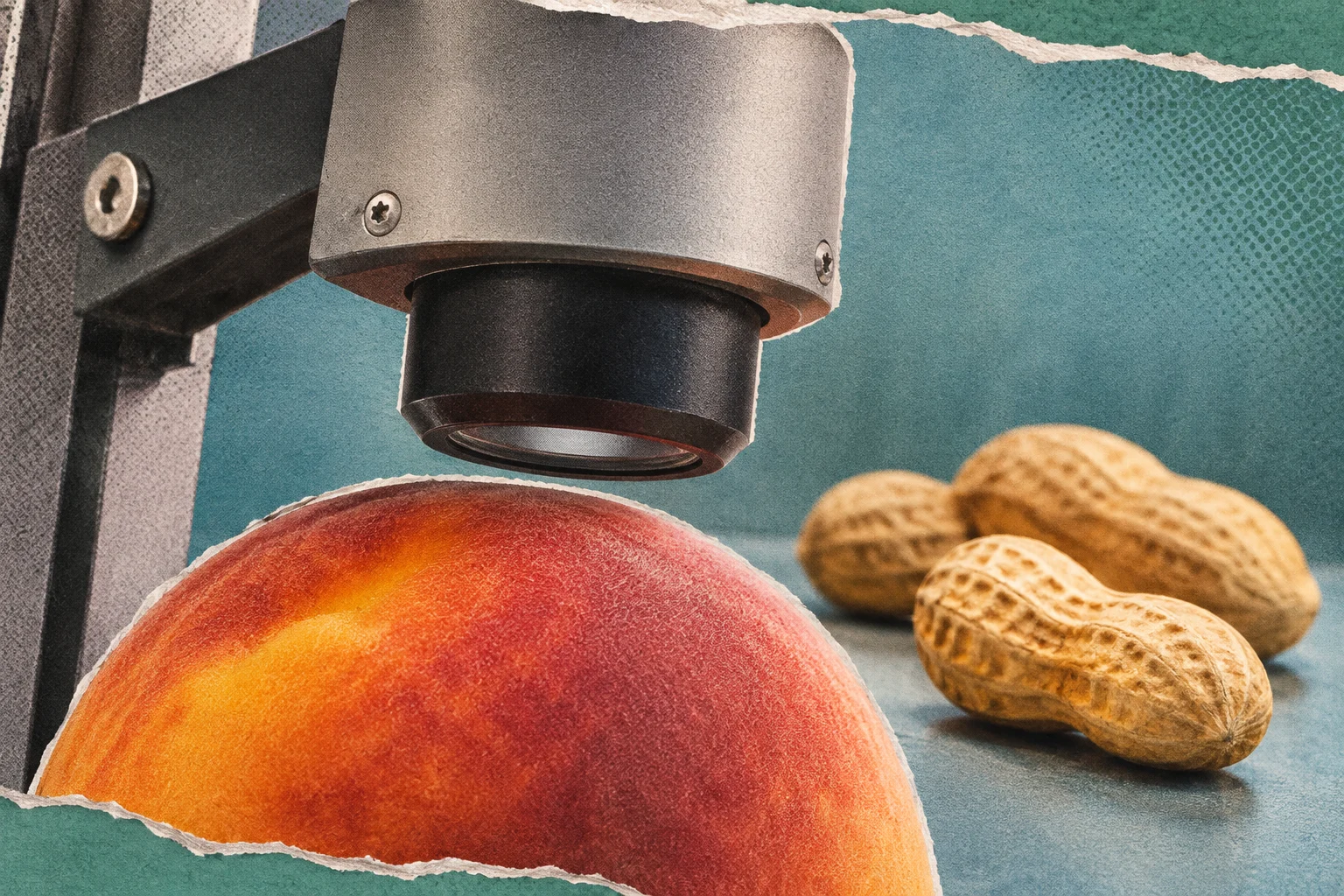
The University of Deusto and its partners have completed an AI-powered prototype designed to screen food for plant allergens. The system is intended to bring non-destructive checks into food-industry quality control, but protocols for testing its reliability still need to be finalized, according to the university’s account and Food Ingredients First.
The November 27 update describes a completed development phase for smartJAN, a project led by Deusto’s eVIDA research group with Kernet and Fundación Miranda. Its immediate purpose was to establish whether light-based measurements and AI could identify particular allergenic proteins in food.
Reading allergens through reflected light
The prototype uses near-infrared spectroscopy: it shines near-infrared light onto a sample and measures the light reflected at different wavelengths. Those measurements form a spectral fingerprint, a pattern that software can analyze. Signal-processing algorithms and AI interpret that pattern for signs of the proteins being targeted. The sensor supplies the measurement; AI supplies the interpretation.
The team studied two allergens: Pru p 3, found mainly in peach skin, and Ara h 9, found in peanuts. Both belong to the lipid transfer protein family, usually shortened to LTPs. This family occurs in many plant foods and includes allergens capable of causing severe reactions. LTP allergies are particularly relevant in the Mediterranean region.
The proposed practical advantage is an on-site scan that leaves the food sample intact. Deusto describes an approach that can analyze a sample without destroying it or sending it to a laboratory. The intended role is faster screening alongside conventional analytical methods, rather than replacing those methods.
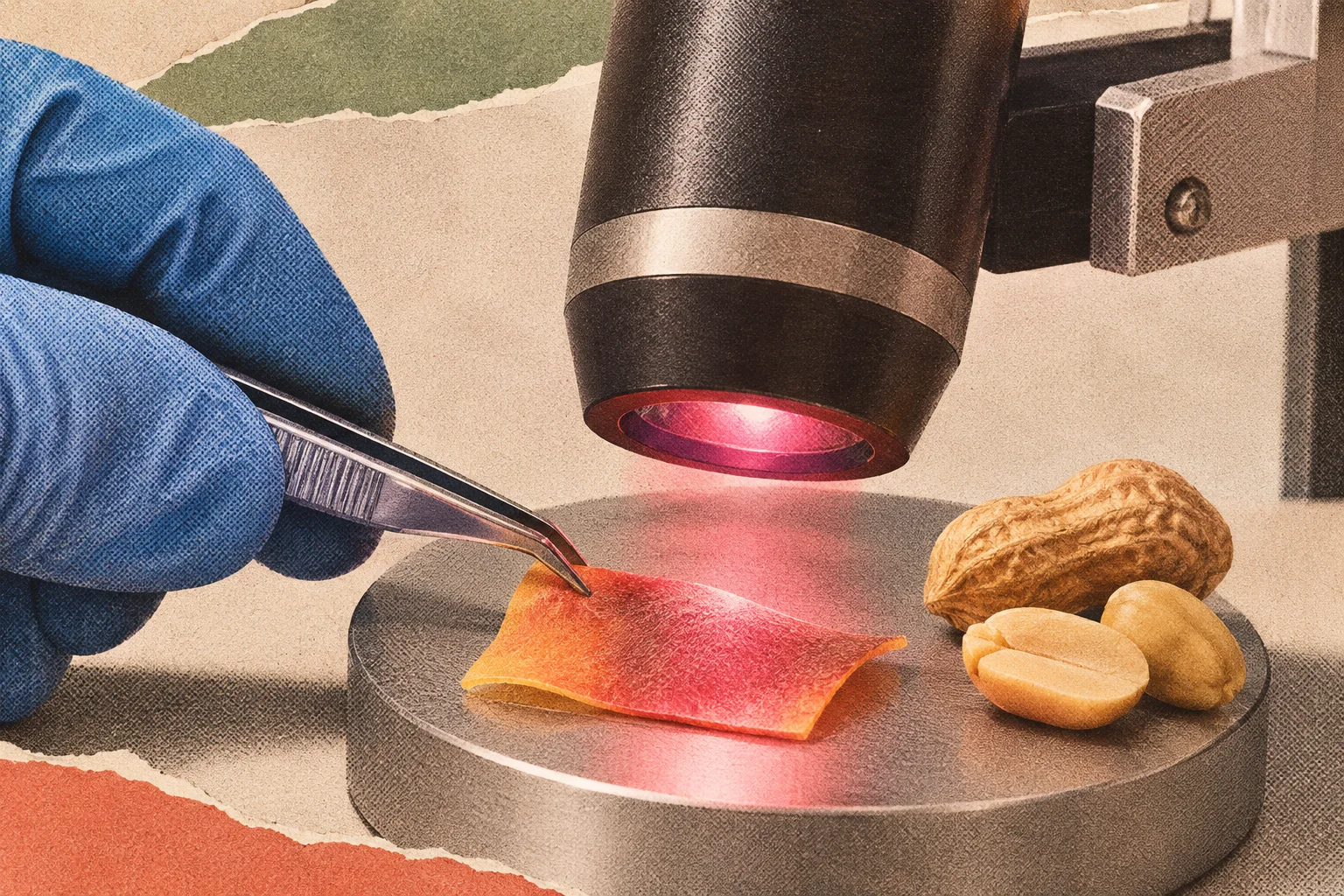 Editorial illustration for Deusto builds AI food-allergen screening prototype, with reliability checks still pending. Source: phys.org.
Reliability checks before routine use
The evidence at the center of the story
Deusto calls the completed device a validated prototype, while also saying reliability-validation protocols remain to be completed. Those are distinct stages: the project reports a functional research prototype, not a finished commercial testing device. Food Ingredients First notes that the university’s announcement provides no performance figures under factory conditions.
For food-quality teams, the unresolved practical questions include how reliably the sensor works across the foods they handle and when a screening result requires follow-up testing. The intended settings extend beyond factories to distribution centers and institutional kitchens, including those serving schools, hospitals and care homes. This is not a device intended for consumers or home use.
The underlying work appeared in Food Analytical Methods, with the cited paper dated 2025. The current update concerns completion of the prototype-development phase, rather than a newly published paper. The project received support through the Basque government’s Hazitek program.
Begoña García-Zapirain, who heads eVIDA, points to earlier tests detecting gluten and bacteria in meat as evidence of wider potential. The university also identifies early detection of pathogens such as Salmonella as a possible future application. That prospect is separate from this project’s stated focus on the two plant allergens.
Bringing the prototype to market now depends on industrial interest in developing it into a commercially available testing device, Deusto says. Completing the research phase is the milestone; securing that next step remains unfinished.