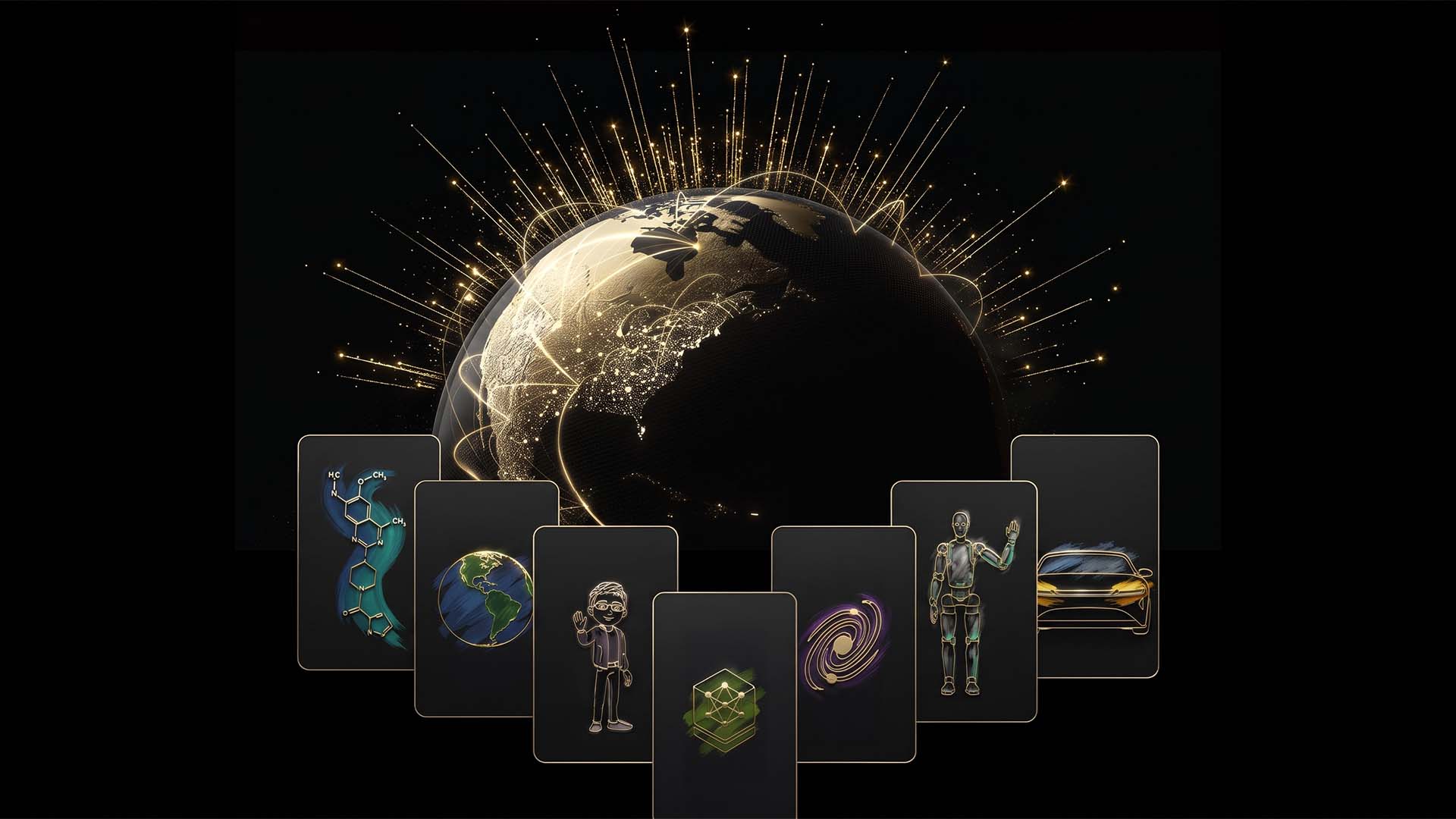
NVIDIA has quietly released open weights on Hugging Face for Nemotron-Labs-Image-30B-A3B, which the company states is an autoregressive image generation model built as the core raster rendering engine for its new Nemotron-Labs-VisualCreation framework. Designed around a “Pixel as Code” philosophy, the agentic framework enables AI systems to produce both expressive raster imagery and editable visual artifacts ranging from webpages, slide presentations, documents, charts, and scientific figures.
Leveraging the Hybrid Mamba-2 architecture keeps Nemotron-Labs-Image-30B-A3B lightweight
To make the LLM accessible for a variety of hardware, Nemotron-Labs-Image-30B-A3B utilizes a Mixture-of-Experts architecture packing 30 billion parameters while activating just 3 billion parameters per token. Nemotron-Labs-Image-30B-A3B made its inception through Nemotron 3 Nano, with the AI model relying on NVIDIA’s Nemotron-H hybrid design that blends Mamba-2 state-space layers with traditional attention mechanisms, refined through progressive mid-training and Group Relative Policy Optimization.
Sample images and graphs shared on the Nemotron-Labs-Image-30B-A3B page show detailed mockups, photorealistic landscapes, and portraits. By keeping active parameter counts low during inference, the AI model aims to deliver high visual quality without needed massive compute overhead when running locally. As for performance, Nemotron-Labs-VisualCreation outperforms proprietary competitors including GPT Image 2 and Nano Banana Pro across several key benchmarks.
 Sample image
 Sample image
For instance, on LongTextBench, which evaluates dense text generation accuracy, Nemotron-Labs-Image-30B-A3B scored 97.98 compared to 96.00 for GPT Image 2 and 97.60 for Nano Banana Pro. It also took the lead on GenEval with 92.86 against GPT Image 2’s 89.00, while posting top marks on CVTG-2K at 92.53, WISE Verified at 91.50, and BizGenEval at 86.0.
 Benchmark of other open-source AI models compared to Nemotron-Labs-Image-30B-A3B
While GPT Image 2 maintained an advantage on GenEval2 with 81.00 versus Nemotron’s 65.43 and led Qwen-Image-Bench at 65.23 against 52.46, NVIDIA’s open-weight release closes much of the remaining gap in structured visual generation. With weights now publicly accessible on Hugging Face, developers and local AI enthusiasts can immediately begin testing the model for both standalone image generation and agentic visual workflows.

If you’re interested in checking out this open-source AI model, let us know in the comments on what you think about its capabilities.
News Source: Hugging Face

About the author: Omar Sohail is a reporter and analyst for Wccftech’s mobile section, specializing in the technology and business of the mobile industry. His expertise lies in the intricate hardware supply chain, covering developments in semiconductor manufacturing, chip lithography, and camera sensor technology.
Get Wccftech in your Google feed
 Follow on Google