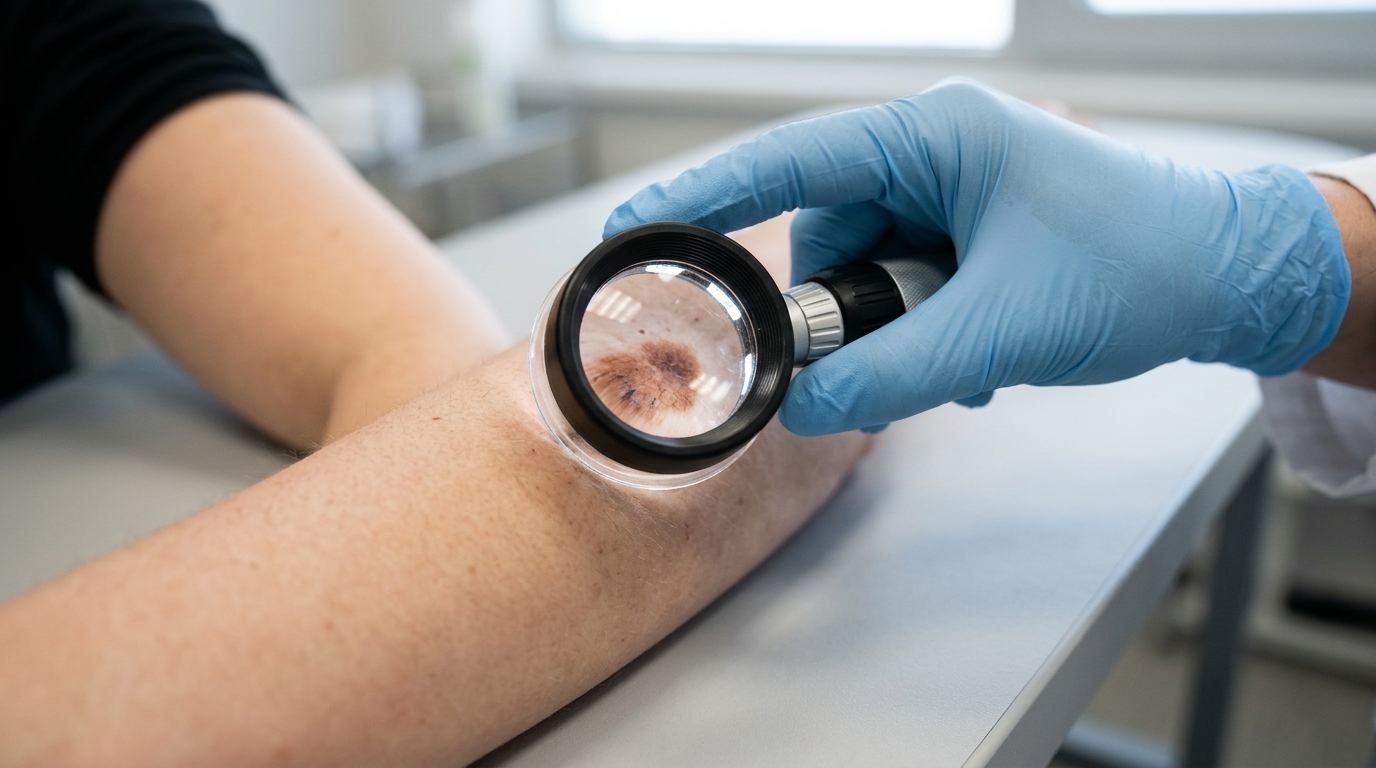
A reliability-controlled heterogeneous dual-teacher framework improves semi-supervised binary segmentation performance for polyps and skin lesions in two-dimensional RGB medical imagery under limited annotation settings. Specifically, when trained with ten percent annotated data, the proposed method achieved a reported mean Dice score that exceeded that of the strongest competing semi-supervised method by 1.30 percentage points on the Kvasir dataset and by 0.74 percentage points on the ISIC-2018 benchmark.
The study directly addresses key technical obstacles in semi-supervised medical image segmentation, a discipline designed to reduce clinical dependence on costly, labor-intensive pixel-level annotations by leveraging abundant unlabeled images. Existing teacher–student learning frameworks frequently struggle with noisy pseudo labels and confirmation bias during training.
To overcome these challenges and enhance pseudo-label reliability, the investigators developed a heterogeneous dual-teacher system specifically tailored for two-dimensional RGB colonoscopy and dermoscopic images. The framework combines two fundamentally distinct teacher architectures: a task-adaptive exponential moving average U-Net teacher and a foundation-model-based Segment Anything Model teacher. This dual-model design is structured to provide complementary supervision during model training, uniting specialized target-domain predictions from the task-adaptive network with generalized structural priors supplied by the Segment Anything Model.
To further improve the reliability of unlabeled-data supervision, the framework introduces a confidence-aware pseudo-label fusion mechanism. The system also integrates lightweight morphological refinement, Segment Anything Model-guided distillation, and superpixel-guided region mixing.
Overall, the experimental results demonstrate the effectiveness of combining specialized domain networks with foundation models under constrained supervision. The researchers concluded that the evaluated empirical findings support the utility of the reliability-controlled heterogeneous dual-teacher framework for semi-supervised polyp and skin lesion segmentation in two-dimensional RGB images, offering a viable strategy for training accurate binary segmentation models when annotated data remain scarce.
Subject of Research: Semi-supervised medical image segmentation using dual-teacher learning
Article Title: Reliability-controlled heterogeneous dual-teacher learning with SAM for semi-supervised medical image segmentation
Article References: Yan, Y., Zheng, J., Wu, P., Xu, H., Zhao, X., & Quan, Y. (2026). Reliability-controlled heterogeneous dual-teacher learning with SAM for semi-supervised medical image segmentation. BMC Medical Imaging. https://doi.org/10.1186/s12880-026-03087-4
Image Credits: AI Generated
DOI: 10.1186/s12880-026-03087-4
Keywords: semi-supervised learning, medical image segmentation, dual-teacher learning, Segment Anything Model, U-Net, polyp segmentation, skin lesion segmentation, colonoscopy imaging, dermoscopy, pseudo-label fusion, confirmation bias, exponential moving average, morphological refinement, knowledge distillation, superpixel region mixing, ISIC-2018 dataset, Kvasir dataset, Dice similarity coefficient