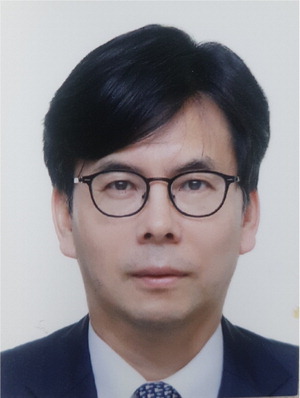
 사진 확대 Choi Joong-in, senior researcher at Core Robotics and a professor of electrical engineering at Gachon University
Artificial intelligence (AI) is changing the power landscape. Generative AI and mega data centers consume huge amounts of electricity 24 hours a day. Demand for electricity skyrockets, but carbon emissions must be reduced. This is why global big tech such as Microsoft, Amazon, and Google are pursuing ’24/7 CFE’. Solar and wind power alone cannot avoid fluctuations in supply due to weather. The value of nuclear power, which generates power stably, is attracting attention again. This means that the outcome of AI competition depends on how stable power is secured beyond semiconductors and algorithms.
However, the way nuclear power plants recognize their carbon-free value requires a careful approach. Renewable Energy Supply Certificate (REC) and Power Purchase Agreement (PPA) are the foundation of the renewable energy industry built through long-term investment and policy support. Conflict will inevitably grow if existing large nuclear power plants demand the same benefits.
Large nuclear power plants are a public power source for the entire nation. If a particular large company contracts this power exclusively, there is a risk that the cost will be passed on to other consumers. The case in which the U.S. Federal Energy Regulatory Commission (FERC) did not accept a plan to expand power supply to data centers related to nuclear power plants in 2024 also shows this problem.
The solution is to separate the role of existing large nuclear power plants and small module reactors (SMR). The Korean-style large nuclear power plant APR1400 proved its export competitiveness in the Czech Republic after the United Arab Emirates (UAE). Large nuclear power plants should focus on a stable supply of public electricity, shortening the construction period, improving operational efficiency, and expanding overseas. On the other hand, SMR can open a new carbon-free power market targeting new consumers such as data centers and steel mills. If a long-term PPA is formed with a demanding company even before construction, it becomes a model that does not take away existing public power but adds supply capacity. Of course, verification of safety, economic feasibility, and system cost sharing should be premised. Only when these conditions are met can new investments be induced without increasing the burden on existing power consumers.
This possibility was confirmed by attending the International Atomic Energy Agency’s Nuclear Energy Emission Specialist Conference in Vienna, Austria, in September. The key is not to unconditionally grant emissions rights to nuclear power, but to objectively prove its contribution to reducing greenhouse gases. Newness, reduction effects, and duplication calculations should be considered more strictly through entire process evaluation (LCA) and measurement, reporting, and verification (MRV). Reliable standards are needed in Article 6 of the Paris Agreement and in the voluntary carbon market. SMR carbon credits are not a system that has already been established, but a task to be pioneered through international discussion and verification.
The most important value in the process is public acceptance. It is difficult to gain social trust if only economic benefits are emphasized while ignoring concerns about spent nuclear fuel and safety issues. It is necessary to transparently demonstrate SMR’s climate contribution and design a system that will coexist with renewable energy. Let’s foster large nuclear power plants as a prop for public power and exports, and SMR as a key player in new carbon-free demand and carbon market development. Energy competitiveness in the AI era depends on realizing stable supply, carbon reduction, and fair cost sharing, not on a camp battle between power generation sources.
[Senior researcher of Core Robotics, professor of electrical engineering at Gachon University]